Best 1/8-Inch Solid Surface Sheets for DIY Projects and More
The 1/8-inch (0.125″) solid surface sheets are a versatile choice for DIY builds, small repairs, and light industrial tasks. This article highlights five relevant options that blend durability, ease of cutting, and broad applicability. Each product page links to Amazon for details, while the buying guide below helps you compare materials, thickness stability, and finishing possibilities to suit your project needs.
| Product | ||||
|---|---|---|---|---|
| Bocolon High Density Polyethylene Sheets | HDPE Sheet | 12″ x 12″ | HDPE | High impact resistance, chemical resistance |
| GLN HDPE Plastic Sheet | HDPE Sheet | 12″ x 16″ | HDPE | Water, wear, and stain resistance; easy machining |
| DIYDIYSHOP HDPE Plastic Sheet | HDPE Sheet (Pack of 2) | 8″ x 12″ (each) | HDPE | Lightweight, durable, food-contact friendly options |
| Rebower HDPE Plastic Sheet | HDPE Sheet | 6″ x 6″ | HDPE | Outdoor weather resistance; versatile for displays and furniture |
| Salimhib Solid Rubber Sheet Roll | Solid Rubber Sheet | 12″ x 12″ (1/8″ thick) | Rubber | Sealing, cushioning, and vibration dampening |
Summary: The selection focuses on 1/8″ HDPE sheets for structural projects, with one solid rubber option for sealing and cushioning. All have standard 0.125″ thickness and common 12″ dimensions, suitable for hobby work, signage, gaskets, and simple fabrications. When choosing, consider whether you need chemical resistance, rigidity, or elasticity for your application.
Bocolon HDPE Sheets 1/8″ 12″ x 12″

The Bocolon sheet is built from high-density polyethylene, offering durability with low water absorption and excellent chemical resistance. Its 1/8″ thickness provides a rigid yet workable block for crafting cutting boards, outdoor cabinetry, or signage. The 12″ x 12″ format is convenient for small projects and quick prototypes. The material’s abrasion resistance makes it suitable for repeated use in displays or work surfaces in protective environments.
Salimhib Solid Rubber Sheet 1/8″

Salimhib offers a solid rubber sheet with adhesive backing, designed for bumpers, flooring protection, sealing, and DIY gaskets. The 1/8″ thickness provides reliable cushioning while maintaining structural integrity under varying temperatures and humidity. Its self-adhesive backing simplifies installation on doors, panels, or equipment casings, and it supports lightweight vibration dampening and weatherproofing tasks in DIY projects.
DIYDIYSHOP HDPE Sheets Pack
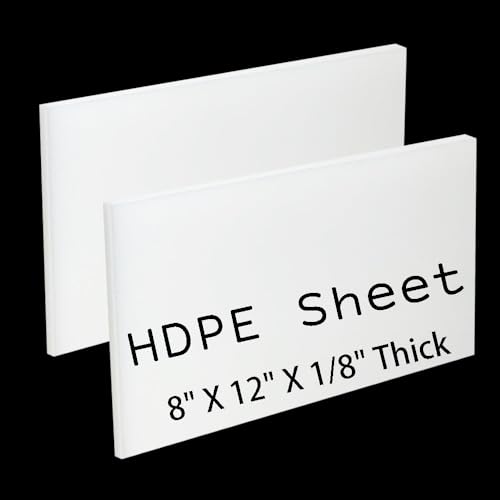
The DIYDIYSHOP offer includes two 8″ x 12″ HDPE sheets at 1/8″ thickness, ideal for quick builds, craft projects, and practice pieces. HDPE is known for corrosion resistance, easy machining, and resistance to many chemicals, making it a practical choice for hobby workshops and educational kits. The white surface texture is suitable for coating or painting for custom signage or decorative panels.
AODESTINY 6061 Aluminum Sheet 1/8″ Thick

While not HDPE, this 1/8″ thick aluminum sheet provides a contrasting option for users evaluating metal versus polymer sheets. The 6061 aluminum plate is versatile for base plates, hobby projects, and fabrication that requires higher strength and heat tolerance. It features a flat, smooth surface with burr-free edges and is suitable for CNC machining, bending, or forming with appropriate tooling.
Rebower 6″ x 6″ HDPE Sheet

Rebower’s 6″ x 6″ HDPE sheet is a compact option for display racks, DIY furniture pieces, and small panels. Its 1/8″ thickness offers stable rigidity while remaining easy to cut and shape. The material’s weather resistance and durability make it practical for indoor and outdoor DIY projects, including mounting boards and decorative inserts.
Buying Guide: Key Purchase Considerations
Purpose and environment: Identify whether you need chemical resistance, outdoor durability, or cushioning. HDPE sheets excel in warehousing, signage, and wet environments, while rubber sheets are better for sealing and vibration damping. For structural parts, consider whether standard metal like aluminum might outperform plastics in rigidity and heat tolerance.
Thickness and density: A consistent 1/8″ thickness provides predictable machining and stable behavior in small parts. If you anticipate heavy loads or high impact, you may opt for slightly thicker options or a tougher polymer. For flexible gaskets, a softer rubber may be preferable.
Machinability: Check for ease of cutting, drilling, and pocketing. HDPE generally machines cleanly with standard shop tools and produces smooth edges. Rubber sheets with adhesive backing simplify installation but may require surface prep for long-term adhesion.
Finish and coating: Consider whether you need a paintable surface or a ready-to-use substrate. White HDPE is suitable for painting and labeling, while darker colors may influence aesthetic choices. Adhesive-backed rubbers can cushion and seal without additional fasteners.
Size and compatibility: Compare sheet dimensions to your project footprint. If you need multiple panels, assess whether a pack or single large sheet fits your design. Ensure compatibility with tools like CNC machines, saws, or heat-forming equipment.
Cost and availability: While 1/8″ sheets are widely available, prices vary by material and brand. Factor in waste from trimming and the potential need for protective coatings. Availability of matching accessories such as adhesives and fasteners can impact overall project cost.
Applications and safety: For DIY boards, signage, or displays, HDPE sheets are a versatile baseline. In sealing or weatherproofing roles, neoprene or solid rubber offers superior elasticity and cushioning. Always follow safety guidelines for cutting and handling, especially with metal or harder plastics.
Environmental and maintenance considerations: HDPE is relatively recyclable and resistant to chemicals; rubber varieties may require additional care to maintain adhesive bonds and seal integrity over time. Consider cleaning methods appropriate for the chosen material to extend its lifespan.
In summary, select HDPE for rigidity, chemical resistance, and ease of processing, while rubber sheets suit applications requiring sealing and cushioning. Align your choice with the project’s exposure, load, and finish requirements to maximize durability and performance.