Best 3/4 Inch Schedule 80 PVC Pipe Guide and Top Picks for High-Pressure Projects
3/4 inch Schedule 80 PVC pipe is a staple for industrial plumbing, irrigation, and high-pressure applications. This guide highlights top-rated options and practical considerations for choosing robust, chemical-resistant pipe and compatible fittings. Each entry provides dimensions, pressure ratings, and typical uses to help you compare. Whether you’re building a high-pressure water line, a chemical transport system, or a durable DIY project, these Schedule 80 options offer the strength and reliability you need.
Summary of selected products:
- 3/4 Inch Schedule 80 PVC Pipe, 18 Inches — Dimensions: 1.05″ OD / 0.742″ ID; Max Working Pressure: 690 PSI
- 3/4 Inch Schedule 80 PVC Pipe, 84 Inches — Dimensions: 1.05″ OD / 0.742″ ID; Max Working Pressure: 690 PSI
- 3/4 Inch Schedule 80 PVC Pipe, 60 Inches — Dimensions: 1.05″ OD / 0.742″ ID; Max Working Pressure: 690 PSI
- Spear 806 Series PVC Pipe Fitting, 90 Degree Elbow, Schedule 80, 3/4″ Socket
- Spears 836 Series PVC Pipe Fitting, Adapter, Schedule 80, 3/4″ Socket x NPT Male
3/4 Inch Schedule 80 PVC Pipe — 18 Inches

Dimensions and fit: This pipe features a 1.05″ outer diameter and 0.742″ inner diameter, with an overall length of 18 inches. The Schedule 80 wall is thicker than Schedule 40, yielding improved pressure tolerance for demanding installations. The enhanced wall thickness supports higher pressure ratings, making it suitable for industrial systems that require robust piping solutions.
Pressure and applications: With a maximum working pressure around 690 PSI, this pipe is designed for high-pressure plumbing and chemical transport scenarios. It’s well-suited for industrial plants, sprinkler systems, and non-residential installations where durability matters. Its chemical resistance and light weight relative to metal alternatives help simplify handling and installation.
Material and compatibility: PVC construction offers corrosion resistance and compatibility with common solvent cements and primers. It pairs well with Schedule 80 fittings and compatible adapters, providing a reliable, non-metallic option for heavy-duty runs.
Considerations: When selecting this pipe, verify the exact length requirements and confirm that Schedule 80 is needed for your project. Also ensure proper solvent cement, primer, and protective handling during installation to maintain an airtight, leak-free joint.
3/4 Inch Schedule 80 PVC Pipe — 84 Inches
Dimensions and fit: This long option preserves the same 1.05″ OD and 0.742″ ID as other 3/4″ pipes, but extends to 84 inches in length for longer runs without joints. The thicker Schedule 80 wall makes it well-suited for longer, high-pressure pipelines in industrial settings.
Pressure and applications: With a 690 PSI maximum working pressure, it remains compatible with high-demand environments where reliability is critical. Ideal for plant installations, irrigation networks, and temporary or semi-permanent high-pressure lines where extra length reduces connections.
Installation notes: Plan for stock management and transport given the longer length. Confirm end fittings and couplings match the 3/4″ socket dimension, and use appropriate protective equipment during cutting and cementing.
Safety and performance: Maintain clean, dry storage, avoid exposure to direct sunlight for extended periods if the product is not rated for UV resistance, and follow local codes when integrating into building systems.
3/4 Inch Schedule 80 PVC Pipe — 60 Inches
Dimensions and fit: This 60-inch segment maintains the standard 1.05″ OD and 0.742″ ID, designed to cover mid-length runs without excessive joints. The Schedule 80 construction continues to deliver resilience in high-pressure contexts.
Pressure and use cases: Suitable for industrial plumbing, chemical handling, and heavy-duty irrigation paths. The elevated wall thickness gives a reliable barrier against pressure spikes and mechanical wear.
Handling and compatibility: When selecting this length, verify your layout planning to minimize joint needs. Ensure compatible solvent cement and primers are used to achieve a secure, leak-proof connection to other Schedule 80 components.
Quality considerations: Look for consistent wall thickness and straightness to ensure uniform coupling with fittings. Storage in a controlled environment helps prevent warping or damage during transit and installation.
Spears 806 Series Elbow — 3/4″ Socket
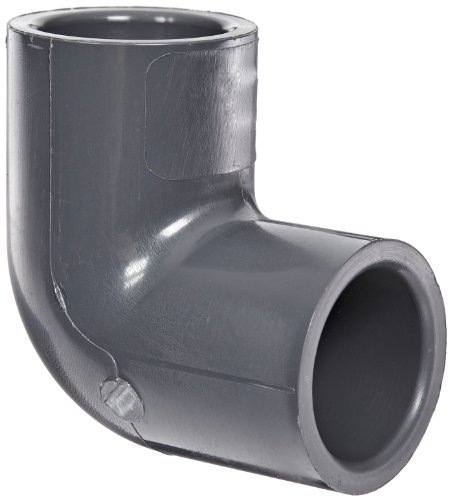
Function and design: This 90-degree elbow provides a reliable turn in a piping run, enabling two pipes or fittings to connect at an angled junction. The 3/4″ socket ends ensure a secure fit with Schedule 80 PVC pipe, offering strong chemical resistance and high strength without added weight.
Material and application: PVC construction resists corrosion and chemical attack, making it suitable for irrigation, drainage, and industrial lines. The elbow is designed for use in non-metallic piping networks where durability matters and tight turns are required.
Installation notes: Use compatible primer and cement to form a robust bond. Align joints precisely to prevent stress at the elbow and ensure smooth flow through the bend. Inspect for leaks after system pressurization.
Considerations: This elbow is optimized for high-pressure environments where rigid piping maintains structural integrity around turns, especially in dense industrial layouts.
Spears 836 Series Adapter — 3/4″ Socket x NPT Male

Adapter capability: This component combines a socket end with NPT male threads, enabling connections between Schedule 80 pipes and threaded fittings or equipment with NPT threads. It’s a practical choice for expanding system versatility and integrating with metal or diverse plastic components.
Durability and compatibility: The adapter uses PVC with high strength and corrosion resistance, delivering a stable connection while remaining lighter than metal equivalents. It supports robust, leak-resistant joints when paired with proper primers and cement.
Installation tips: Ensure the mating threads are clean and dry. Apply thread sealant or tape as recommended for PVC-to-NPT connections and cure per product guidelines before pressurizing the system.
Applications: Useful in plant pipelines, water handling systems, and DIY projects where converting between socket and NPT ends is needed, particularly in high-pressure contexts handled by Schedule 80 components.
VENTRAL PVC Pipe Schedule 80 Industrial Grade — 2 Ft

American-made manufacturing: Ventral’s Schedule 80 pipe is produced in the USA and designed for non-residential applications, featuring easy installation with primer and solvent cement. The gray industrial pipe is non-toxic and lightweight for straightforward handling.
Use cases: Suitable for irrigation, underground drainage, cold water supply lines, and outdoor installations. Its corrosion resistance and structural integrity support both indoor and outdoor high-pressure systems when used with compatible fittings.
Practical considerations: Always match pipe to fittings and follow local code requirements for non-residential projects. Consider environmental exposure and UV considerations, if relevant to your installation site.
Landical 6 Pcs 3/4” Black PVC Pipe — SCH 80

Package and sizing: This set contains six 3/4″ black PVC pipes, each approximately 40 inches long, with inner diameter around 0.742″ and outer diameter about 1.05″. The Schedule 80 wall thickness provides enhanced strength for demanding projects and higher pressure scenarios.
Materials and safety: Made from non-toxic PVC, these pipes are suitable for a range of DIY and industrial applications, including greenhouse builds, structural projects, and maker experiments. They’re designed to pair with standard 3/4″ fittings for reliable assembly.
Project planning: The bulk pack supports multi-piece builds and future projects, reducing the need for frequent re-purchasing. Inspect pipes for straightness and surface integrity prior to cutting and installation.
Buying Guide: Key Considerations For 3/4 Inch Schedule 80 PVC Pipe
- Pressure rating: Schedule 80 offers thicker walls and higher pressure tolerance than Schedule 40. Confirm the maximum working pressure (often around 690 PSI for many 3/4″ Schedule 80 pipes) matches your system’s needs and consider potential pressure surges.
- Length and layout: Plan pipe runs to minimize the number of joints, especially in high-pressure environments where joints can be weak points. Longer segments reduce leak risk but require careful handling and transport.
- Dimensional compatibility: Ensure outer and inner diameters align with your fittings and solvent cement methods. The standard 1.05″ OD and 0.742″ ID for 3/4″ Schedule 80 pipes affects coupling choices.
- Fittings and adapters: Use compatible Schedule 80 fittings, elbows, and adapters to maintain system integrity. Socket, NPT, and threaded connections must be matched correctly to avoid leaks or pressure loss.
- Material and environment: PVC provides chemical resistance and low weight, but consider UV exposure, temperature range, and site conditions. For outdoor or radiant environments, check UV-rated options or protective measures.
- Installation methods: Use approved primers and solvent cement, follow manufacturer guidelines, and allow proper curing time before pressurizing the system. Safety gear and ventilation are important during solvent-based installations.
- Compliance and code requirements: Review local plumbing and building codes to ensure Schedule 80 PVC piping is permitted for the intended application, especially in commercial or civil projects.
- Cost and availability: Compare lengths, bundles, and source reliability. Bulk purchases can reduce unit costs, while stock availability may influence lead times for long runs.