Best Corridor Handrails for Nursing Homes: Safe, Durable Stair Support
Choosing the right corridor handrails is essential for safety, mobility, and peace of mind in nursing homes and assisted living facilities. This guide highlights five reliable options from well-known brands, focusing on solid wood and metal constructions designed to support residents, caregivers, and visitors. Each pick combines sturdy build quality with practical design features suited to hallways, stairs, and corridor transitions. Read on for detailed product sections, installation notes, and a buyer’s guide to help you compare options.
| Product | Brand | Length / Range | Key Benefit |
|---|---|---|---|
| Maasechs 6010 Red Oak Handrail Kit | Maasechs | 6 ft | Solid red oak, wall brackets included |
| 6FT Wooden Stair Handrails | JuneFanwei | 6 ft | Solid pine with stainless-steel brackets; high weight capacity |
| Wooden Handrails, 1-14ft Non-Slip | KEPMOGOH | 1-14 ft | Versatile lengths; rounded edge; durable finish |
| Shineforu 4FT Handrails | Shineforu | 4 ft | Heavy-duty iron, 500 lb capacity |
| 10FT Round Wooden Stair Hand Rail | KWDOBUUS | 10 ft | Solid wood with metal brackets; broad reach |
Maasechs 6010 Red Oak Handrail Kit
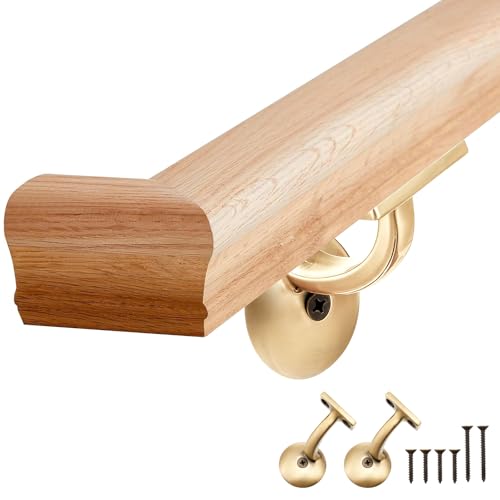
Maasechs offers a complete red oak handrail kit designed for corridor and stair installations in care facilities. The kit includes a 6 ft handrail, two wall brackets, and matching screws for straightforward mounting. Constructed from solid unfinished red oak, the rail emphasizes natural grain patterns and a refined finish that complements modern interiors. The 90-degree design on each end maintains a consistent wall clearance of about 1.5 inches, which supports comfortable grasping zones for residents and staff during transfers or daily navigation. This kit aims for both durability and visual appeal, making it suitable for public corridors as well as private patient rooms.
6FT Wooden Stair Handrails

JuneFanwei presents a robust 6 ft wooden stair handrail engineered for indoor and outdoor use in care environments. Crafted from natural pine, the rail features an environmentally friendly coating that enhances durability while remaining easy to clean. The system pairs with stainless-steel brackets to ensure stability and a load-bearing capacity exceeding 500 pounds, contributing to safe patient handling and caregiver support. Its semicircular grip and rounded edges reduce the risk of snagging or injury, which is important for mobility-impaired residents, visitors, and staff who assist in daily routines.
Wooden Handrails, 1-14ft Non-Slip

This KEPMOGOH model emphasizes versatility with a length range from 1 to 14 feet, making it adaptable to multiple corridor layouts. The handrail uses solid pine and a protective water-based coating for durability and easy cleaning. Brackets are steel, providing solid anchorage that supports heavy use in hallways, lounges, and access routes. The handrail’s half-round profile is designed for comfort and safety, reducing grip fatigue for elderly residents and mobility-impaired individuals who rely on steady hand support during transitions between rooms or along corridors.
Shineforu 4FT Handrails

Shineforu delivers a compact 4 ft indoor handrail with a strong 500-pound capacity. The product features a heavy-duty iron construction and wall-mount design, ideal for narrow hallways or stairwells in nursing home corridors where space is at a premium. The railing’s solid metal build provides reliable, long-term support for residents, staff, and visitors, supporting steady movement through tight turns and entryways. Installation is designed for straightforward mounting to walls, aiding maintenance crews and facility staff in routine updates or repairs.
10FT Round Wooden Stair Hand Rail

KWDOBUUS offers a longer 10 ft wooden handrail designed to span extended corridors or multi-level staircases. The combination of a solid pine core and metal brackets ensures a balanced blend of warmth and strength. The 3-section design helps minimize sag and maintain a consistent grip along long runs, which is beneficial for patients who need extended support while walking or transferring between rooms. The coated finish resists moisture and wear, making it suitable for busy nursing home environments where cleanliness and durability are critical.
Buying Guide: Key Considerations for Corridor Handrails in Nursing Homes
When selecting corridor handrails for nursing homes or assisted living facilities, consider these factors to balance safety, usability, and maintenance:
- Material and finish: Solid wood provides warmth and grip comfort, while steel or iron offers higher load capacities. Choose coatings that resist moisture, are easy to clean, and meet facility hygiene standards.
- Grip profile: Half-round or semicircular grips reduce hand fatigue and are easier to grasp for residents with limited dexterity. Rounded edges minimize injury risk during falls or bumps.
- Length and adaptability: Longer rails reduce the number of joints but may require more precise installation. Products offering modular lengths (1-14 ft ranges) can better fit irregular layouts.
- Mounting and brackets: Wall-mounted systems with sturdy brackets are essential for stability. Ensure brackets are corrosion-resistant and compatible with typical wall materials in facilities.
- Weight and load capacity: Look for rails rated to support at least 500 pounds where possible, especially in high-traffic corridors or spaces used by caregivers and visitors.
- Maintenance and cleaning: Surfaces should be easy to wipe down and resistant to cleaning agents used in healthcare settings. Wood rails may require periodic refinishing to maintain grip and appearance.
- Compliance and accessibility: Ensure designs comply with local safety codes and accessibility standards. Consider color contrasts and signage to aid navigation for residents with visual impairments.
Across these options, end-users should weigh installation complexity against expected usage. In busy nursing home corridors, a balance between a robust, easy-to-clean metal rail and the warmer grip of solid wood railings often yields the best overall safety and comfort. Flexibility in length, the reliability of mounting hardware, and the presence of included brackets are practical indicators of a ready-to-install solution that reduces downtime and maintenance labor for facility staff.
Additional Considerations for Facility Managers
- Staff training: Ensure maintenance teams understand mounting procedures and safety checks for rails and brackets.
- Replacement cycles: Plan for wear, especially in high-traffic zones, to avoid degraded grip or loose fittings.
- Aesthetics vs. practicality: Select rail designs that blend with interior design while maintaining function for residents and visitors.
- Warranty and support: Check manufacturer warranties and available customer support for installation questions or replacement parts.
By comparing options with these criteria in mind, facility managers can equip corridors and stairways with handrails that promote safer mobility for aging residents, support staff, and visitors, while maintaining a clean, navigable environment.