Best Liquid Rubber for Concrete Molds: Durable, Flexible Options for Detailed Reproductions
Discover top liquid rubber options that deliver high fidelity for concrete and plaster molds. This guide compares common latex and silicone mold-making rubbers, focusing on detail retention, flexibility, cure time, and ease of use. Each choice below is suitable for intricate concrete molds and offers reliable results whether you’re a hobbyist or a professional. The selections highlighted prioritize availability in American markets and compatibility with spray or brush applications for versatile projects.
| Product | Material | Key Benefit | Best For |
|---|---|---|---|
| EnvironMolds LayTex Liquid Latex Mold Making Rubber, 32-oz. | Latex | Detailed reproductions, versatile application | Intricate plaster and concrete molds |
| HV-65 Pint of High Viscosity Natural Liquid Latex Mold Making Rubber | Latex | One-part, brush or pour, stretchy and durable | Smooth to moderately detailed molds |
| EnvironMolds Liquid Latex Mold Making Rubber, 16 oz. | Latex | High-precision detailing, adjustable viscosity | Detailed molds with flexible handling |
| BBDINO Silicone Mold Making Kit, 30A Sapphire Blue | Silicone | Low viscosity, self-degassing, long working time | Resin, jewelry, concrete molds |
| MITINU 22 oz Liquid Silicone Mold Making Kit, 15A | Silicone | 1:1 mix, easy to handle, high elasticity | Detail-rich silicone molds for various media |
Selected products emphasize realistic detail, user-friendly mixing ratios, and materials suitable for concrete and plaster casting. The following sections provide concise overviews of each option, including how it’s used, performance notes, and practical considerations for choosing the right rubber for your project.
EnvironMolds LayTex Liquid Latex Mold Making Rubber

LayTex is a premium ivory white latex molding compound designed for detailed replicas of plaster and concrete forms. Its formulation supports fine line work and subtle textures, making it a strong choice for complex concrete molds. The material can be applied via spray or brush, offering flexible workflow. It dries to a soft, flexible rubber film with low shrinkage, helping molds preserve delicate features over multiple uses. This product is suitable for hobbyist projects and more demanding applications where high fidelity matters.
HV-65 Pint of High Viscosity Natural Liquid Latex Mold Making Rubber

HV-65 is a one-part latex rubber ideal for those who prefer a straightforward, no-mix solution. It can be brushed or poured into gypsum molds and yields a stretchy yet durable rubber after curing. The high viscosity helps control layering during application, reducing sag on vertical surfaces. This makes HV-65 well-suited for molds with fine details and more demanding geometries where a strong, flexible result is required.
EnvironMolds Liquid Latex Mold Making Rubber, 16 oz.

This 16-ounce latex option emphasizes high-precision detailing and flexible handling. It supports both spray and brush applications and can be adjusted in viscosity by adding demineralized water or a small amount of ammonia to enhance flexibility. The material forms a soft, flexible film with minimal shrinkage, helping molds retain dimensions and capture fine textures over time. It’s a practical choice for artists who want versatile processing and reliable results for detailed concrete reproductions.
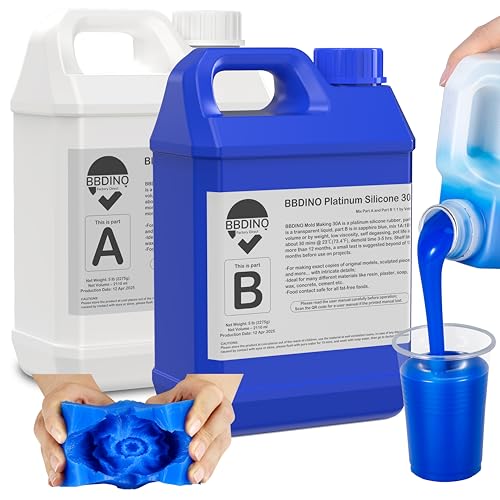
BBDINO Silicone Mold Making Kit, 30A Sapphire Blue

This silicone kit uses a 1:1 mix ratio and offers low viscosity with self-degassing capabilities. It cures without a vacuum chamber and provides a long working time, making it suitable for larger or more intricate molds, including concrete casts. The 30A hardness yields a balanced combination of flexibility and tear resistance, enabling accurate replication of fine details. It’s a versatile option for resin, wax, concrete, and other molding applications where durable silicone is preferred over latex.
MITINU Silicone Mold Making Kit 30A, 1 Gallon
The MITINU 30A silicone kit comes as a large 1 gallon (10 Lbs) kit with 1:1 by volume or weight mixing, including two bottles of platinum-cure silicone. It’s designed for easy, bubble-free mixing and pouring, with a working time of about 30 minutes and a cure window of 3–4 hours at room temperature. The material promises low shrinkage and high tear resistance, making it suitable for complex silicone molds used in resin, concrete, or other casting media. This kit is ideal for beginners seeking a comprehensive starter set and for experienced makers pursuing durable molds with fine detail.
Buying Guide: Key Considerations When Choosing Liquid Rubber For Concrete Molds
- Material type and flexibility: latex rubbers generally offer good detail and ease of use, while silicone rubbers tend to provide superior tear resistance, longer mold life, and less shrinkage. Consider your mold complexity and expected reuse count.
- Mixing and application: one-part latex formulas are simple, but silicone kits require precise mixing ratios. Look for products with clear instructions, self-degas features, and workable pot life suitable for your project size.
- Detail fidelity and shrinkage: for concrete molds with intricate textures, choose rubbers known for low shrinkage and high fidelity to capture fine lines and surface textures accurately.
- Cure time and working time: longer working time is helpful for large or complex molds; faster cures save project cycles but may reduce adjustment time. This trade-off should match your workflow.
- Safety and handling: ensure the product is suitable for indoor use, and consider odor and potential skin sensitivities. Platinum-cured silicones are generally low in odor and have strong safety profiles when used as directed.
- Reuse and durability: silicone rubbers typically offer greater longevity and tear resistance for repeated casts compared to latex. If you plan many reproductions, silicone options may be more economical in the long run.
- Color and appearance: some products are white or ivory latex, which can affect the surface finish of the cast. Consider surface prepping or post-treatment steps if needed for your final piece.
- Cost and availability: availability in the American market and delivery speed can influence your choice. For frequent mold makers, stocking multiple options may improve project flexibility.
When selecting a liquid rubber for concrete molds, align the material’s properties with your project scale, desired mold life, and production pace. Latex options excel in simple to moderately detailed molds with straightforward workflows, while silicone systems are favored for durability and high-detail molds intended for repeated use. The product selections above cover a range of common needs, from easy-to-use latex systems to robust silicone kits suitable for serious mold making.