Best Step Stool for Toddlers to Reach the Sink
Finding a safe, durable step stool helps toddlers gain independence during everyday routines like brushing teeth, washing hands, and potty training. The options below cover a range of heights, materials, and designs to fit different bathrooms and kitchens. Each pick emphasizes non-slip features, sturdy construction, and ease of use for young children and their caregivers.
| Product | Key Benefit | Height Range |
|---|---|---|
| Fisher-Price Toddler Step Stool | Non-slip textured top; wide base; lightweight | Low to mid-height |
| Onasti Toddler 3 Step Stool | Convertible 3-to-2 step; sturdy with dual handles | Adjustable |
| Forbena Toddler Step Stool | 2-step design; easy to assemble; 200 lb capacity | 2-step height |
| esemoil Toddler 3-Step Stool | Height adjustable; anti-slip; BPA-free | 3-step (adjustable) |
| UNCLE WU 2 Step Stool | Anti-slip; sturdy; cute design; supports adults | 2-step |
Fisher-Price Toddler Step Stool

Fisher-Price offers a lightweight stool with a textured, non-slip top to help little feet stay secure during daily routines. The wide base adds stability, reducing tipping risks when toddlers reach for sinks or counters. Its simple, portable design makes it easy for caregivers to move between rooms as needed.
Key features include a sturdy base for reliable support and a surface texture that enhances grip. This model emphasizes ease of use for both toddlers and parents, supporting confidence during potty training and handwashing.
Onasti Toddler 3 Step Stool

This Onasti model adapts to growing kids with a convertible design that shifts from 3 steps to 2, giving flexibility as children gain height. It also features dual armrests and an “A” frame for added stability. The lightweight build supports easy movement around the home while maintaining safety.
Designed for kitchen counters, bathroom sinks, beds, and sofas, it aims to promote independence during potty training and everyday tasks without sacrificing safety or footprint.
Forbena Toddler Step Stool
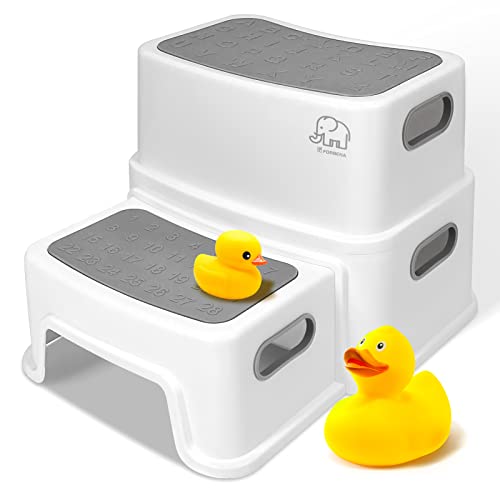
The Forbena two-step stool is designed for bathroom and kitchen use with eight slip-resistant feet and carrying handles for easy transport. It supports up to 200 lb, making it suitable for both toddlers and occasional adult use. Assembly is straightforward and the stool snaps together in minutes, offering a quick setup for potty training and hygiene routines.
Its lightweight construction paired with non-slip feet improves stability on tile floors, making it a practical pick for households seeking a simple, secure solution.
esemoil Adjustable 3-Step Stool

esemoil’s 3-step stool offers height adjustability with a 2-step conversion option, accommodating children at different growth stages. The design emphasizes an anti-slip, stable structure with burr-free handrails for comfortable handling. Made from BPA-free PE material, it’s positioned as a safe option for households prioritizing non-toxic plastics.
Clean lines and durable engineering support frequent use in kitchens or bathrooms, with a focus on safety for potty training and basic self-care tasks.
UNCLE WU 2 Step Stool
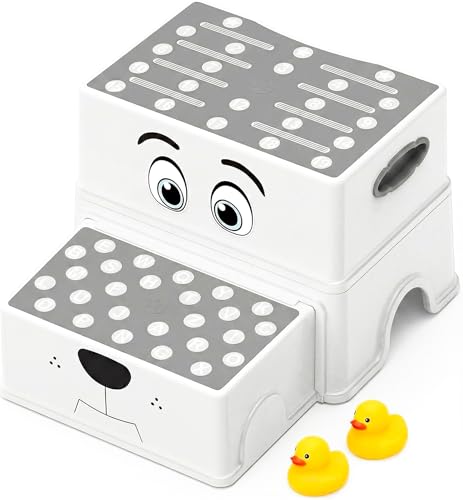
UNCLE WU’s 2-step stool pairs a sturdy, heavy-duty feel with an appealing design. It features an anti-slip surface and a wide two-step configuration that supports up to 150 lbs, including adults if needed. The design emphasizes safety and durability while maintaining a friendly aesthetic to engage toddlers during toothbrushing, handwashing, and potty training.
Buying Guide
Key purchase considerations help match a stool to a child’s needs and household setup:
- Height range and adjustability: Choose stools with fixed low heights for younger toddlers or adjustable/convertible designs to accommodate growth and multiple tasks.
- Stability features: Look for anti-slip surfaces, non-slip feet, and sturdy frame designs (A-frame or wide base) to reduce tipping risks.
- Weight capacity: Ensure the stool can comfortably hold the child’s weight and, if needed, occasional adult use for supervision or assistance.
- Materials and cleaning: BPA-free plastics or easy-clean surfaces are practical for shared bathrooms and kitchens; smooth edges reduce risk of snagging clothing or skin.
- Portability and storage: Lightweight stools with carry handles or foldable designs simplify moving between rooms and storing when not in use.
- Intended use: Consider where the stool will be most used—bathroom sink, kitchen counter, toilet training, or near a bed for getting in and out safely.
- Maintenance and longevity: Durable construction and simple assembly mean fewer replacements and less frustration during potty training phases.
With these factors in mind, families can choose a stool that supports independence while maintaining a strong safety profile. The highlighted models balance portability, stability, and ease of use, helping toddlers reach sinks, counters, and toilets with confidence.