Best Waterproofing Solutions for Basement Walls and Floors
Investing in basement waterproofing protects foundations, prevents moisture-related problems, and preserves indoor air quality. This guide highlights reliable products designed to seal,防 block water intrusion, and reinforce concrete surfaces. Each option has distinct strengths for walls, floors, or both, helping you choose based on surface type, environment, and maintenance needs.
| Product | Brand | Primary Use | Amazon Link |
|---|---|---|---|
| KILZ Basement and Masonry Waterproofing Paint | KILZ | Interior/Exterior masonry walls | Visit Product |
| Zinsser WaterTite Waterproofing Floor and Wall Paint | Zinsser | Basement walls and other masonry | Visit Product |
| RadonSeal Standard Concrete Sealer | RadonSeal | Deep-penetrating concrete protection | Visit Product |
| RadonSeal Plus Deep Penetrating Sealer | RadonSeal | Basement walls and floors, enhanced protection | Visit Product |
| MAXWAVE 17″ x 150′ Waterproof Underlayment | MAXWAVE | Under tile, showers, and high-moisture areas | Visit Product |
Note: The table above groups products by core purpose—waterproofing paint for surfaces, penetrating sealers for long-term protection, and underlayment for floors and wet areas. All selections aim to reduce water ingress and moisture-related issues in below-grade spaces.
KILZ Basement And Masonry Waterproofing Paint
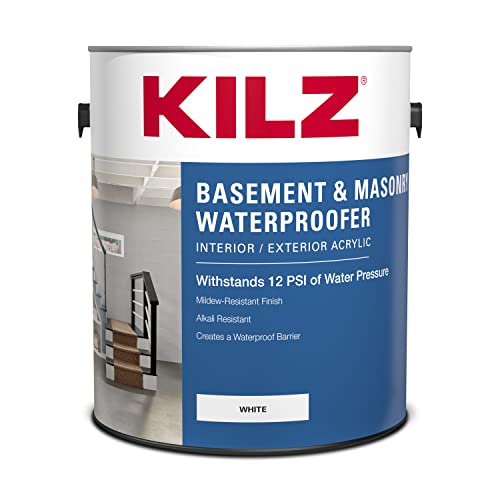
KILZ Basement and Masonry Waterproofing Paint is a premium interior/exterior coating designed to seal porous concrete and masonry surfaces. The formula employs nanotechnology to create a barrier that helps stop water infiltration, while an alkali-resistant coating reinforces durability and provides a decorative finish. It is suitable for properly prepped basement walls above and below grade, as well as masonry surfaces like stucco and brick. The product is not recommended for floors or walls with active leaks and should be applied with a high-quality roller or spray equipment capable of handling 2200-3200 PSI. This makes it a practical option for sealing walls and retaining structures that experience intermittent moisture or dampness rather than active flooding.
Key considerations:
- Best for: Sealing walls and above/below grade masonry surfaces, not for active leaks.
- Application: Roller, brush, or airless sprayer; ensure proper curing before exposure to moisture.
- Durability: Alkali resistance supports long-term performance on concrete and masonry.
Zinsser WaterTite Waterproofing Floor And Wall Paint

Zinsser WaterTite is a waterproofing paint formulated for basements and other interior/exterior masonry surfaces. It covers up to about 100 square feet per gallon and carries a ten-year waterproof guarantee, making it suitable for wall surfaces, planters, fountains, retaining walls, and similar features. While primarily used on walls, its water-resistant properties can contribute to a balanced approach when paired with proper drainage and dehumidification strategies. It is particularly attractive for projects needing a clear coat or aesthetic finish over masonry.
Key considerations:
- Best for: Masonry walls and other structures exposed to damp environments.
- Coverage: Approximately 100 sq ft per gallon; consider multiple coats for lower porosity surfaces.
- Guarantee: Provides a long-term waterproofing expectation with proper prep.
RadonSeal Standard Concrete Sealer
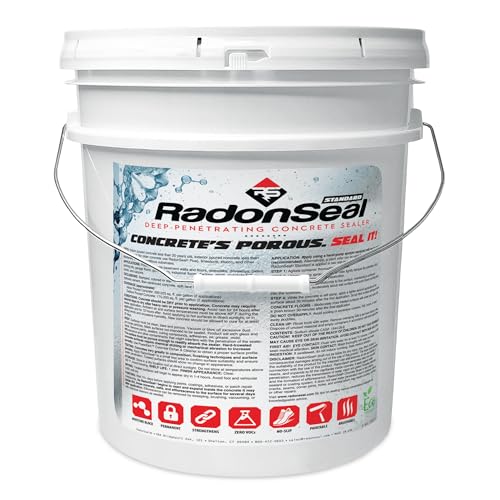
RadonSeal Standard is a deep-penetrating clear protectant designed for concrete inside and outside. It seals pores to reduce water infiltration, moisture vapor, and efflorescence, making it a solid foundational treatment for basement walls, foundation walls, slabs, and crawlspaces. The product also functions as a densifier to strengthen concrete, reducing dusting, cracking, and damage from salts and freeze-thaw cycles. It is marketed as a permanent solution—reapplication is typically unnecessary once cured. This makes it suitable for new or aging concrete surfaces where long-term protection is desired.
Key considerations:
- Best for: Deep penetration in poured concrete to block moisture and vapor.
- Longevity: Described as permanent with deep chemical bonding.
- Compatibility: Works well with other moisture-control strategies like proper drainage and sump systems.
RadonSeal Plus Deep Penetrating Sealer

RadonSeal Plus extends the penetrating sealer approach with added performance for basement walls and floors. The formula penetrates up to several inches, blocking water, vapor, and radon gas from concrete surfaces. It strengthens concrete against dusting, crazing, and damage from salts and de-icers while providing an environmentally friendly, water-based formula with zero VOCs. Indoor use is typically odor-free and safer for occupied spaces. This makes RadonSeal Plus a strong option when radon mitigation and moisture control are both priorities.
Key considerations:
- Best for: Comprehensive basement protection against water,radon, and vapor.
- Environmental impact: Low VOCs and indoor-friendly formulation.
- Depth of penetration: Deeply bonds within concrete for long-term results.
MAXWAVE Waterproof Underlayment

MAXWAVE 17 Inch by 150 Feet Underlayment provides a high-density polyethylene membrane with enhanced waterproof capabilities. This underlayment is designed for under-tile applications, shower walls, and floors, offering moisture control and vapor retardation. The 20-mil thickness supports durability and is reinforced with non-woven polypropylene on both sides and a continuous filament fiber exterior, improving resistance to wear and tear. It’s particularly suitable for shower waterproofing membranes and basement floor transitions where moisture control is critical. Proper installation and seam handling are essential for optimal performance.
Key considerations:
- Best for: Shower areas, tile installations, and basement floor patches requiring a moisture barrier.
- Size and flexibility: Large roll size allows customization; cut with scissors or knives.
- Vapor barrier: Provides low vapor permeance alongside waterproofing benefits.
MAXKSOKO Waterproof Membrane Tape

Note: This product line focuses on waterproof membrane bonding around walls, corners, and seams. The tape is designed to seal connections between membranes and surfaces, minimizing leakage points in basement waterproofing systems. Consider this as part of a broader installation plan that includes proper surface prep, drainage, and moisture management. Pairing with a thicker underlayment or sealer can improve overall effectiveness in high-humidity environments.
Key considerations:
- Best for: Seams and corners where water intrusion tends to occur.
- Compatibility: Works best with compatible membranes and primers.
- Durability: Designed to maintain adhesion in moisture-prone spaces.
CrawlSpace-DIY WaterShield Drain Board
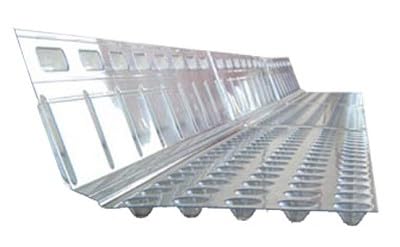
The CrawlSpace-DIY WaterShield Drain Board is designed to channel water away from footing areas to drainage tiles and sump pumps. These boards help restore structural integrity to basement slabs by directing water toward exit points, reducing hydrostatic pressure on walls and footings. This product is particularly useful in crawlspaces and basements where drainage plays a crucial role in moisture management. Installation should align with a full drainage plan, including vapor barriers and sump alternatives where appropriate.
Key considerations:
- Best for: Providing a clear water flow path to reduce hydrostatic pressure.
- Installation: Should be integrated with drainage tiles and pumping systems.
- Impact: Helps maintain structural integrity by managing water movement.
Buying Guide: Key Purchase Considerations For Basement Waterproofing
Selecting the right solution requires weighing surface type, moisture level, and long-term maintenance. Consider the following approaches to create a layered moisture-control plan:
-
<liSurface assessment: Determine if walls are actively leaking, damp, or dry to select the appropriate product (paint-based sealers for surface dampness vs. penetrating sealers for deeper moisture).
<liMaterial compatibility: Ensure coatings and membranes work with your existing substrate (concrete, masonry, or cementitious surfaces) and with each other when used in combination.
<liVentilation and humidity control: Pair waterproofing with dehumidification to manage interior moisture and prevent mold growth.
<liDrainage integration: Combine wall/floor coatings with proper drainage, sump pumps, or drain tiles to address ongoing water intrusion.
<liDurability and maintenance: Consider long-term protection (penetrating sealers) versus temporary coatings (paint-based) and plan reapplication or refinishing accordingly.
<liEnvironmental and health factors: Prefer low-VOC or water-based products for indoor use, especially in living spaces connected to basements or crawlspaces.
<liInstallation quality: Follow prep guidelines—clean, dry surfaces; cured materials; and correct application methods—to maximize warranty outcomes and performance.
By combining these products within a tailored plan, homeowners can address both immediate moisture issues and long-term basement durability. If moisture problems persist or worsen, consult a professional for a comprehensive assessment and potential structural interventions.